
Comprehensive Commercial Automatic Door Repair Services in Miami
Commercial Automatic Door Repair Services in Miami-Dade
Automatic door repair in Miami addresses the full spectrum of commercial automatic door issues, from sensor failures to access control integration, ensuring safe, code-compliant operation across retail, healthcare, hospitality, and property management sites. This article explains how commercial automatic doors deliver accessibility and security benefits in Miami-Dade County, outlines the specific repair and maintenance services commonly required, and describes emergency response and preventative programs that reduce downtime and cost. Facility managers and property engineers will learn the diagnostic signs to prioritize, the steps technicians take during sliding and swing door repairs, and how access control repairs complement door operation and auditing. We also map practical maintenance tiers, present EAV-style comparisons to guide procurement, and show when urgent repairs are needed to preserve life-safety and business continuity. Read on for targeted guidance on automatic door repair Miami stakeholders can use to specify work, budget appropriately, and select reliable service partners.
What Are the Key Benefits of Commercial Automatic Doors in Miami?
Commercial automatic doors provide seamless access and controlled entry for high-traffic properties, combining accessibility, energy performance, and security benefits that matter in Miami’s climate and regulatory environment. These systems reduce friction for people with mobility needs, support regulated flow in busy retail and healthcare settings, and integrate with access control systems to safeguard restricted areas. Properly specified automatic doors also limit conditioned air loss from frequent openings, reducing HVAC cycling and energy costs in South Florida’s warm, humid climate. Finally, automated doors improve customer experience and throughput during peak hours, lowering trip hazards and supporting ADA compliance across entrances.
The principal benefits include:
- Accessibility and ADA compliance that accommodate mobility devices and reduce barriers to entry.
- Energy savings through rapid-cycle operators and improved seals that limit conditioned air exchange.
- Security and controlled access when integrated with card readers, locking relays, and audit-capable controllers.
- Enhanced customer throughput and safety by eliminating manual door operation that causes congestion.
These advantages lead naturally into specific mechanisms by which doors improve accessibility and security, described in the next subsection.
How Do Automatic Doors Improve Business Accessibility and Security?
Automatic doors improve accessibility by using motion and presence sensors to open reliably when a person approaches, eliminating the physical barrier of manual operation and meeting ADA thresholds for accessible routes. The same sensor and control logic supports safety by detecting obstructions and reversing or stopping motion when necessary, while safety edges and photo-eye sensors provide redundancies that reduce pinch and impact risks. From a security perspective, integrating electric strikes, interlocks, and access control readers allows facility managers to enforce time-based or role-based access and maintain audit logs for investigations. For facility teams, a checklist of sensor health, seal integrity, and control-board error codes provides a fast triage method before scheduling repairs or upgrades.
The importance of automatic doors in meeting accessibility standards is further highlighted by research into ADA compliance.
ADA Compliance for Automatic Doors: Accessibility & Standards
The Americans with Disabilities Act (ADA) of 1990 and the aging of the U.S. population has increased the attention given to the accessibility of public buildings to disabled individuals. Automated doors are a common method for providing access for the disabled, and their low energy operated counterparts offer a cost and possible energy savings over full automation. These doors, activated by the press of a button, are regulated by ADA code through an ANSI/BHMA standard.
Compliance and Evaluation of Code for Low Energy Power Operated Handicap Accessible Doors, N Wiggermann, 2007
These operational mechanisms also affect energy performance, which is particularly relevant for Miami properties seeking HVAC efficiency gains.
Why Choose Energy-Efficient Automatic Doors for Miami Properties?
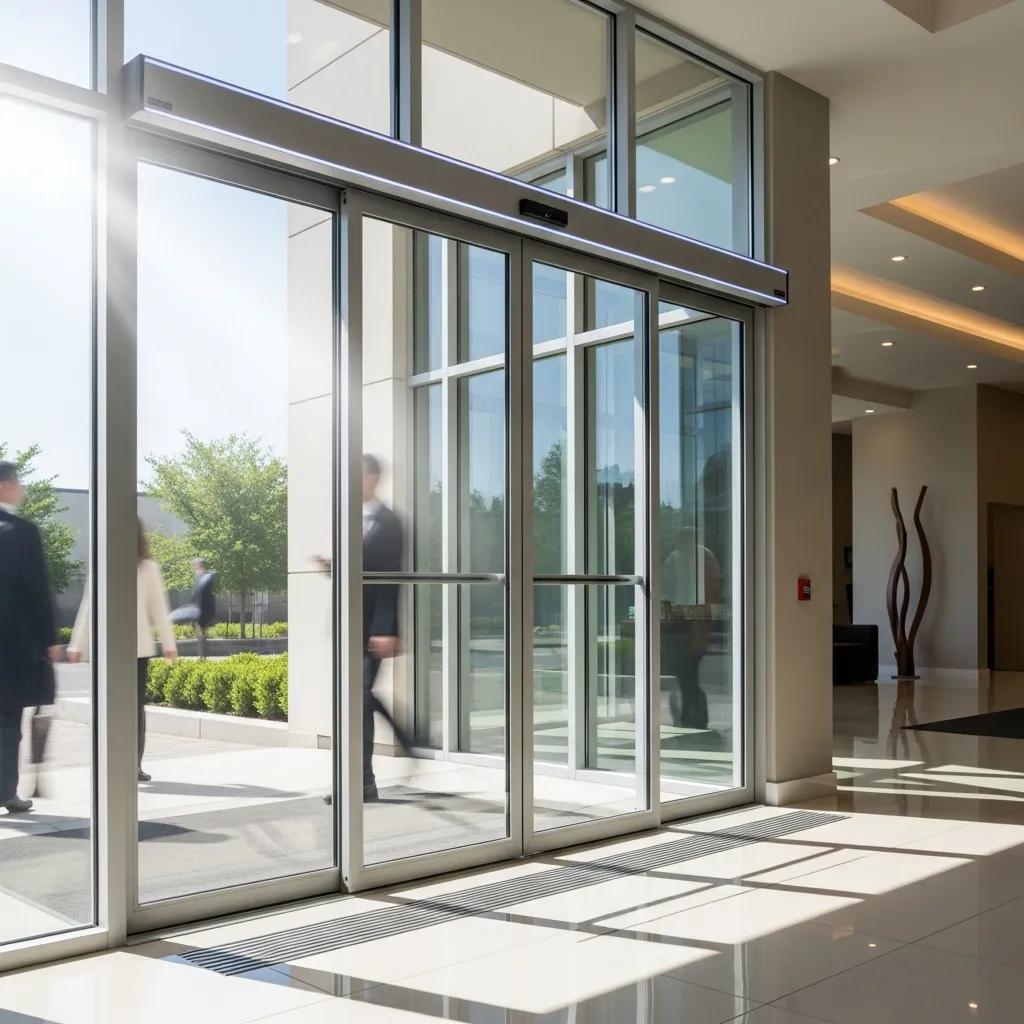
Energy-efficient automatic doors reduce conditioned-air loss through faster cycle times, tighter gasketing, and improved threshold seals, which collectively lower HVAC runtime in hot climates like Miami. Properly calibrated operators minimize unnecessary open time, and high-performance glass door assemblies can reduce solar heat gain while preserving visibility for merchandising and natural light. Facility managers should consider ROI by comparing incremental energy savings against upgrade or repair costs; in many commercial settings modest reductions in HVAC cycling translate to measurable utility savings over a year. Selecting doors with certified sealing ratings and specifying scheduled calibration ensures ongoing performance that offsets initial investment and supports sustainability goals.
Understanding these benefits leads into the specific repair services available to maintain these performance outcomes.
Which Automatic Door Repair Services Does Oratso Corporation Offer in Miami-Dade?
Automatic door repair services encompass a range of technical interventions that restore safe, reliable operation for sliding, swing, and glass automatic doors, as well as sensors, motors, and access control components. Technicians diagnose electrical faults, sensor alignment, mechanical wear, and control board errors before implementing repairs or recommending parts replacement. Rapid troubleshooting often resolves sensor and motor faults the same day, while complex control board repairs or custom glass fabrication may require scheduled parts ordering and follow-up. For commercial clients, clear communication about root cause, repair steps, and expected time-to-repair helps prioritize operations without sacrificing safety.
Common service categories include automatic sliding door repair, automatic swing door repair, sensor and motor repair, control board replacement, glass panel replacement, and access control integration.
Below is an EAV-style comparison to help facility managers evaluate typical issues and repair timelines.
This comparison helps stakeholders estimate on-site effort and schedule service windows. Below we examine common sliding door faults in more detail.
What Are Common Issues in Automatic Sliding Door Repair?
Automatic sliding doors commonly fail due to sensor misalignment or contamination, track wear that causes uneven motion, damaged rollers, and control board faults caused by surges or moisture ingress. Symptoms include doors that oscillate, fail to detect approaching users, run slowly, or stop with audible grinding; these observable cues direct the first diagnostic checks. Technicians typically inspect sensors and lenses, measure track straightness, lubricate or replace rollers, and test motor draw before concluding whether control board repair or motor replacement is required. Quick on-site fixes often restore function, but in cases of replacement parts, planning for procurement and scheduling a follow-up visit ensures a complete resolution.
After addressing technical steps, property managers often prefer working with a single vendor who combines diagnostic expertise and responsive scheduling. Oratso Corporation offers 24/7 availability, free estimates, licensed and insured technicians, and promotional “best deals” pricing; to request service, contact their office at 305-888-2211 or email info@oratsocorp.com. This combination of technical focus and lead-generation support ensures managers can get a timely quote and scope of work while repairs remain solution-first.
How Is Automatic Swing Door Repair Conducted?
Automatic swing door repair begins with an inspection of the operator, hinge assemblies, and safety edge, followed by calibration of opening/closing speeds and force settings to meet safety and ADA requirements. Technicians verify electrical connections to the operator, test backup power features, and recalibrate safety edges and sensors to ensure proper fault response. Common parts replaced include operator modules, hinge kits, and safety edge sensors; after parts replacement, technicians perform cycle testing and verify that the door meets serviceability and compliance thresholds.
Documented post-repair testing and a maintenance recommendation help minimize recurrence and keep operators operating efficiently.
How Does Emergency Automatic Door Repair Work in Miami?
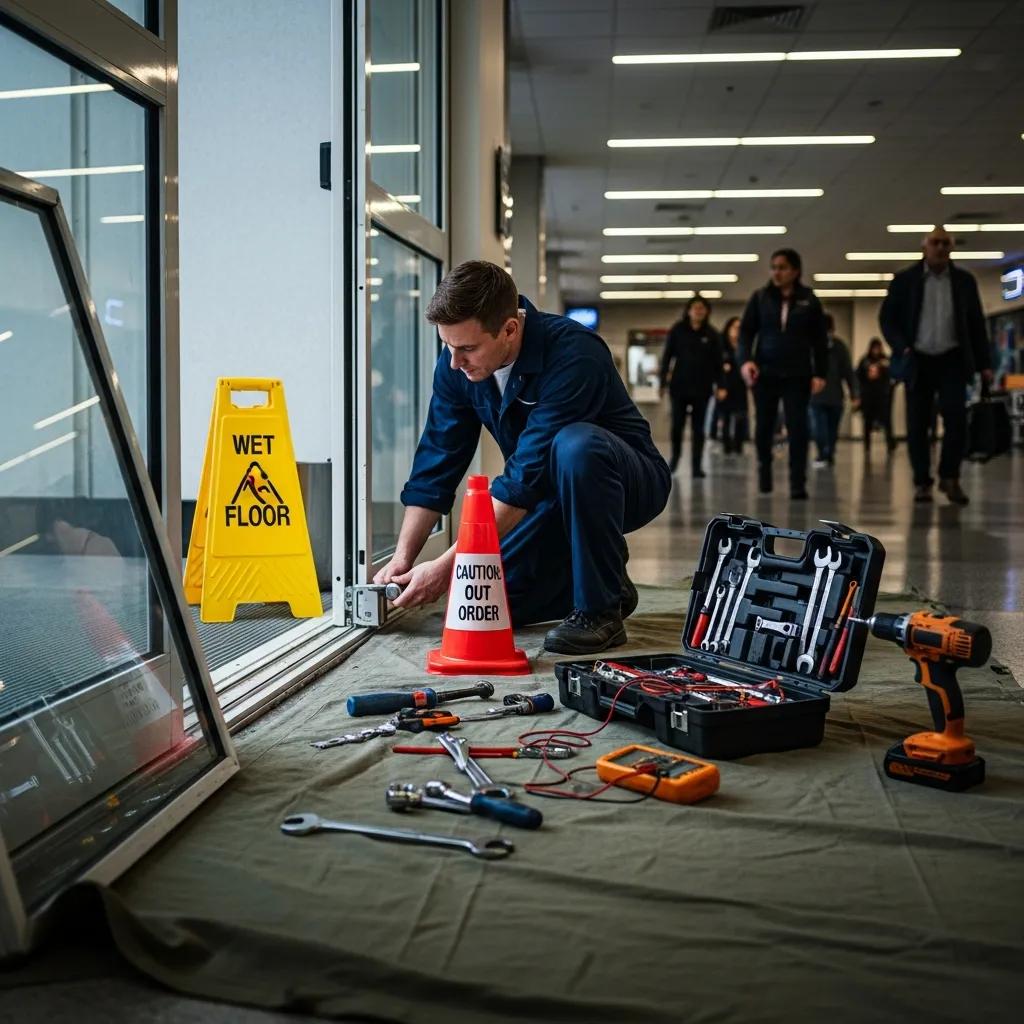
Emergency automatic door repair in Miami follows a rapid-response workflow focused on safety triage, temporary secure measures, diagnostic assessment, and prioritized parts replacement to restore function with minimal downtime. The process begins with a dispatch and ETA communication, proceeds to a safety assessment to determine if doors present life-safety risks, implements temporary measures (such as securing doors open or closed), and completes a targeted repair or schedule for permanent replacement. Clear communication with on-site staff and a written summary of the immediate fix plus recommended next steps ensure that operations can continue while longer repairs are arranged. Service level considerations like response time windows and stocked parts influence how quickly a fully permanent repair can be completed.
Here is a concise step-by-step description of the emergency workflow designed for featured snippet-style clarity:
- Dispatch and rapid ETA communicated to the customer and building contact.
- On-site safety triage to determine immediate hazards and necessary temporary safeguards.
- Diagnostic assessment to identify root cause and parts or adjustments required.
- Temporary fixes implemented to restore safe operation or secure the opening.
- Parts replacement or scheduled permanent repair with post-repair testing and documentation.
This operational sequence explains what to expect during an emergency call and leads into why a 24/7 service model matters for reliability.
What Makes Oratso’s 24/7 Emergency Repair Service Reliable?
Reliability in emergency repair stems from an on-call technician network, stocked service vans with common replacement parts, and established dispatch protocols that prioritize safety-critical calls. Oratso Corporation emphasizes steady communication during dispatch and documents on-site findings and remedial steps, which reduces miscommunication and repeat visits. Remote diagnostic tools and standardized troubleshooting checklists help technicians arrive prepared and complete repairs faster, while a follow-up verification ensures the fix holds under typical traffic patterns. Clients benefit from this predictable approach because it minimizes operational disruption and supports insurance, compliance, and audit requirements.
When Should Businesses Request Immediate Automatic Door Repairs?
Businesses should request Immediate Automatic Door Repairs when doors are stuck open or closed, safety sensors fail to detect users, entrapment or pinch hazards arise, or when access control failures create security breaches that allow unauthorized access. Other high-priority scenarios include doors that impede fire egress paths or that repeatedly fail during peak operating hours and risk customer safety. For lower-priority cosmetic or non-critical latency issues, scheduled service windows are appropriate; however, any failure affecting fire egress, ADA access, or security should trigger an emergency response.
Prompt classification ensures resources are allocated correctly and transitions the discussion to preventative maintenance that reduces emergency frequency.
What Are the Advantages of Preventative Maintenance for Commercial Automatic Doors?
Preventative maintenance for commercial automatic doors reduces long-term repair costs, minimizes unexpected downtime, and preserves warranty and code compliance through scheduled inspections and targeted adjustments. Routine tasks include sensor calibration, lubrication of rollers and tracks, safety-edge testing, seal inspections, and control-board diagnostics that catch early degradation before it escalates.
Regular maintenance also produces documentation that supports compliance with life-safety and accessibility regulations, helping property managers avoid fines and liability. Implementing a tiered maintenance plan enables organizations to match service frequency and coverage to building type and usage intensity.
The following EAV table compares sample maintenance plan tiers, included services, and typical cost ranges so managers can select the right program for their facility needs.
This table clarifies how plan scope and frequency relate to expected service coverage and helps facilities balance cost against uptime. Below, we describe Oratso’s program options and recommendations.
Which Maintenance Programs Does Oratso Provide in Miami-Dade?
Oratso Corporation provides tiered maintenance programs that align with common facility needs: a Basic inspection cycle for low-traffic sites, a Comprehensive program with sensor recalibration and safety testing for mid-traffic properties, and a Premium tier that adds priority emergency response and parts discounts for critical infrastructure. Each tier schedules inspections at defined intervals and documents findings with recommended remedial actions to keep doors compliant and operational. Matching plan tiers to building type—retail, healthcare, or hospitality—helps prioritize components like faster cycle inspections for retail and redundancy checks for healthcare. These structured programs reduce the administrative burden on property teams while delivering measurable uptime improvements.
Regular preventative care also demonstrably reduces the incidence of costly emergency calls, a relationship explored in the next subsection.
How Does Preventative Care Reduce Repair Costs and Downtime?
Preventative care reduces costs by identifying wear items—rollers, seals, and sensors—before catastrophic failure, allowing scheduled replacement at lower material and labor rates and avoiding premium emergency dispatch charges. Early detection through scheduled inspections limits collateral damage to control boards and motors, which are costlier to replace than the failing wear components that often cause them. Case studies in the sector indicate notable reductions in emergency service frequency when maintenance is consistent, translating to improved operational uptime and lower total cost of ownership. For procurement, facility managers should compare the predictable expense of maintenance against historical emergency repair spend to quantify savings.
How Does Access Control System Repair Integrate with Automatic Door Services?
Access control repair integrates technically with automatic door services by ensuring controllers, card readers, electric strikes, and interlocks communicate correctly with door operators and safety circuits to maintain secure, reliable operation. When access control components fail—stuck relays, corrupted controller firmware, or reader faults—the downstream effect can be doors that unlock unexpectedly, fail to release, or refuse authorized entry. Coordinated repair workflows involve synchronized testing of lock hardware, operator response, and audit log validation to ensure that both physical and logical controls align with security policies. Integrated maintenance and repair reduce the chance of security gaps and simplify vendor management for building operators.
Below is a practical list of common access control solutions and their use cases so decision makers can align repair priorities with business objectives.
- Card readers and prox systems: Provide role-based access and straightforward maintenance paths for high-occupancy commercial buildings.
- Keypads and PIN entry: Offer low-cost access control for service areas and secondary entrances with simple fault remediation.
- Biometric readers: Deliver higher assurance for secure zones but require specialized troubleshooting and calibration.
- Remote release and integrated sensors: Support front-desk operations and must be validated against door operator response times.
This solution-level perspective prepares the reader for how repairs enhance door security and auditability.
What Access Control Solutions Are Available for Miami Commercial Doors?
Commercial doors commonly integrate with card access systems, keypad/PIN entry, biometrics for secure zones, and remote release mechanisms for reception areas, each with distinct maintenance needs and repair profiles. Card and keypad systems are resilient and straightforward to repair, while biometrics require calibration and environmental control to maintain reliability in humid climates like Miami. Remote-release integration needs tight synchronization with operator response to avoid safety conflicts. For buildings with audit and compliance needs, selecting systems with robust logging and repairable modular components eases long-term maintenance.
Repair of these systems typically requires coordinated testing with door operators to ensure the physical lock and the logical controller respond consistently, which is discussed next.
How Does Repair of Access Control Systems Enhance Door Security?
Repairing access control controllers, readers, and locking relays reduces vulnerabilities such as stuck-open faults, unauthorized local overrides, and failed audit logging that impede incident investigation. Remediation steps include replacing faulty relays, updating firmware on controllers, recalibrating readers to avoid false accepts, and restoring secure wiring paths to prevent tampering. Properly executed repairs restore complete audit trails and ensure lock commands align with operator states, which strengthens compliance with corporate security policies and local regulations. By viewing access control and door operation as a single system, maintenance programs can close gaps that isolated repairs would otherwise miss.
Why Choose Oratso Corporation for Your Commercial Automatic Door Repair Needs in Miami?
Oratso Corporation positions itself as a full-service door company for Miami-Dade County with capabilities across automatic and impact doors, windows, and access control systems, offering field service, installation, and service programs tailored to commercial clients. The company’s local coverage across South Florida and the Caribbean, licensed and insured technicians, and emphasis on rapid response and documented repairs create practical benefits for facility managers. Oratso provides free estimates and promotes competitive “best deals” pricing to reduce procurement friction and expedite repair authorization for busy operations. For urgent needs, their 24/7 availability and coordinated dispatch protocols help limit downtime and preserve business continuity.
Key trust signals and customer-facing services include:
- Licensed and insured technicians who document repairs and compliance checks.
- Free estimates that speed procurement and clarify scope before work begins.
- 24/7 emergency availability and priority dispatch under premium service plans.
The combination of local technical depth and responsive service options makes Oratso a viable partner for commercial automatic door repair needs; contact 305-888-2211 or email info@oratsocorp.com to request a free estimate or emergency dispatch.
What Experience and Credentials Does Oratso Bring to Miami Businesses?
Oratso Corporation is described as a full-service door company established in 2004, with regional coverage across Miami-Dade and neighboring counties and experience serving commercial sectors like retail, healthcare, hospitality, and property management. The company emphasizes licensed and insured technicians, field-installed parts capability, and integrated service offerings that include both mechanical door repairs and electronic access control troubleshooting. Local project experience supports rapid diagnosis and parts selection appropriate for South Florida environmental conditions, which can accelerate repair timelines and improve long-term reliability. This operational footprint and service breadth provide buyers with a single-source option for coordinated door and access control work.
These credentials feed into procurement benefits that follow, including free estimates and transparent pricing practices.
How Do Free Estimates and Competitive Pricing Benefit Miami Clients?
Free estimates reduce procurement friction by giving building managers a clear scope of work and cost basis before authorization, enabling faster scheduling and less time tied up in quotes or vendor comparisons. Competitive or promotional pricing—described as “best deals”—helps clients compare total cost of ownership across repair and maintenance plans without sacrificing documented service standards. The typical client workflow becomes estimate → scope agreement → scheduled repair or maintenance, which minimizes downtime and improves budgeting accuracy. Transparency of scope and documented post-repair testing further shortens time-to-service and supports operational continuity for commercial properties.
These purchasing advantages encourage timely repairs and regular maintenance, which together preserve door performance and building safety.