

FAQ: Everything You Need to Know About Metal Doors in Miami
FAQ: Everything You Need to Know About Metal Doors in Miami
Metal doors in Miami are a popular choice for both commercial and residential properties due to their durability, security features, and ability to withstand the region’s unique climate challenges. This article aims to provide comprehensive insights into various types of metal doors, their benefits, installation considerations, and maintenance tips. Readers will learn about the specific features that make metal doors suitable for Miami’s environment, including hurricane resistance and fire safety compliance. As many property owners face challenges related to security and weather resilience, understanding the advantages of metal doors can help in making informed decisions. We will explore the different types of metal doors available, their security features, installation costs, and how to maintain them effectively.
What Are the Different Types of Metal Doors Available in Miami?
The different types of metal doors available in Miami include:
- Hollow metal doors
- Steel doors
- Fire-rated doors
- Hurricane impact doors
- Specialty security doors
What Are Hollow Metal Doors and Their Benefits?
Hollow metal doors are constructed with two steel facings welded around a honeycomb or polystyrene core, providing high impact resistance and thermal efficiency. Their benefits include:
- Durability: They offer exceptional strength and high impact resistance, making them suitable for both interior and exterior use.
- Cost-Effectiveness: They provide a strong strength-to-cost ratio, making them a budget-friendly option compared to solid steel doors.
- Low Maintenance: Powder-coated finishes resist corrosion, which is particularly beneficial in humid environments like Miami.
- Customizability: They can be tailored in size and hardware options to fit various commercial needs, such as retail, office, and warehouse entrances.
- Structural Rigidity: The core design minimizes material use while maximizing strength, making them ideal for cost-driven projects requiring long-lasting performance.
How Do Fire-Rated Doors Comply with Miami Regulations?
Fire-rated doors comply with Miami regulations by integrating steel construction with insulated cores to achieve specific fire resistance ratings (typically 90 or 180 minutes) and by adhering to standards such as NFPA 80. These doors are designed to limit the spread of fire and smoke, ensuring safety for occupants and property. Additionally, they may need to meet local codes that include additional measures for hurricane exposure, such as Miami-Dade County NOA protocols. This compliance not only enhances safety but can also lead to insurance credits and facilitate fire marshal inspections.
How Do Hurricane Impact Metal Doors Protect Miami Properties?
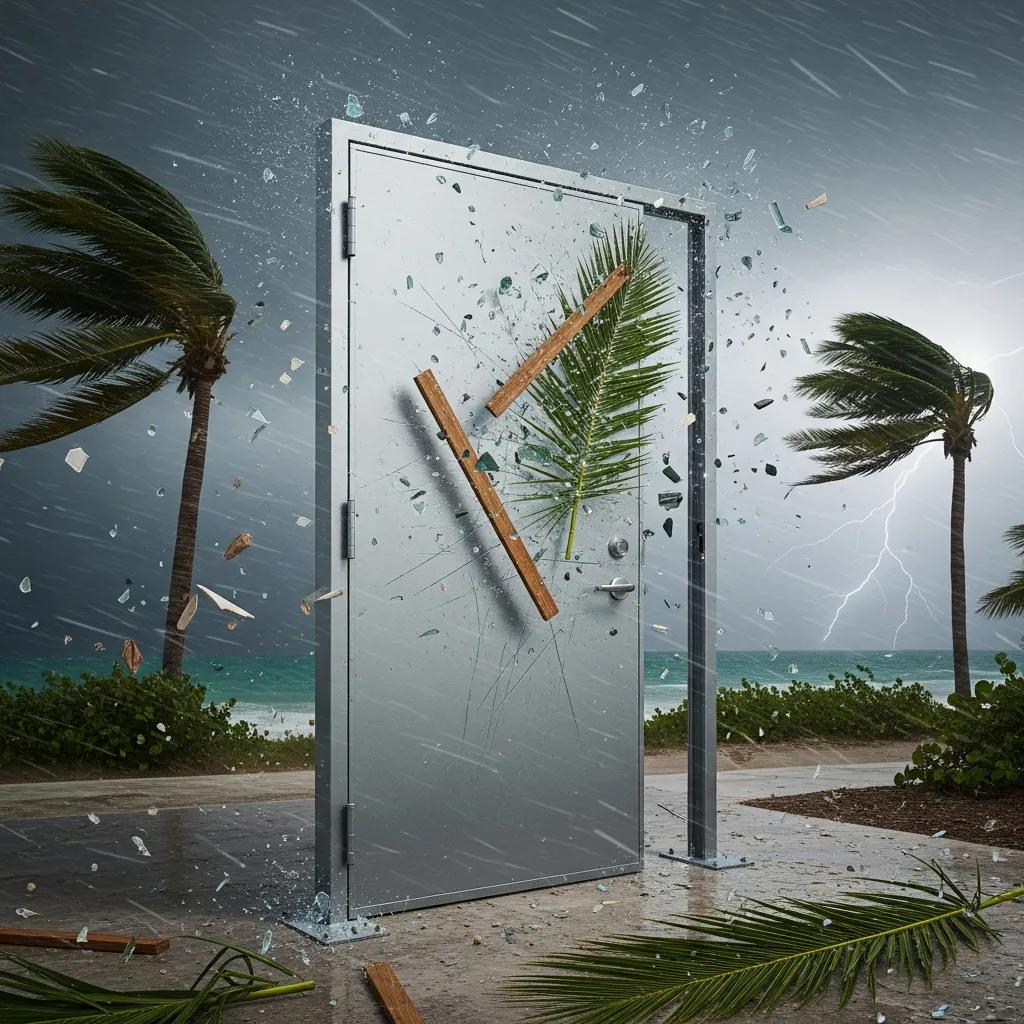
Hurricane impact metal doors protect Miami properties by being engineered with reinforced stiles, rails, and laminated glazing to withstand extreme wind loads and debris impacts. They are often certified under Miami-Dade County NOA protocols, ensuring compliance with local hurricane safety requirements. The heavy-gauge steel construction resists wind-borne debris, while factory-applied coatings protect against salt air corrosion. Additionally, sealed edges and adjustable thresholds block moisture intrusion, and thermal breaks in composite cores reduce heat transfer, preserving indoor comfort during severe weather. These features collectively limit storm damage and enhance the safety and durability of properties in hurricane-prone areas.
What Is Miami-Dade NOA Certification for Impact Doors?
Miami-Dade NOA Certification for impact doors is a certification that verifies building products, including doors, have undergone rigorous testing to withstand severe weather conditions, such as high-velocity winds and windborne debris from hurricanes. To achieve this certification, hurricane impact doors must pass specific impact resistance tests, including tests with a 9-pound 2×4 projectile, and must comply with the Florida Building Code for High-Velocity Hurricane Zones (HVHZ). Certified models display NOA labels, confirming their compliance and ability to withstand wind pressures up to ±140 psf.
How Do Impact Doors Enhance Security and Durability?
Impact doors enhance security and durability through several key features. They are constructed with heavy-gauge steel and reinforced frames that resist forced entry and vandalism. The use of multi-point locking systems distributes force across the door, significantly increasing resistance to prying. Additionally, impact doors are designed to withstand extreme weather conditions, such as hurricanes, with features like laminated glass and reinforced stiles that protect against wind pressure and debris impact. Their durable materials and construction reduce maintenance costs and ensure long-lasting performance, making them ideal for both commercial and residential applications.
What Are the Key Security Features of Metal Doors in Miami?
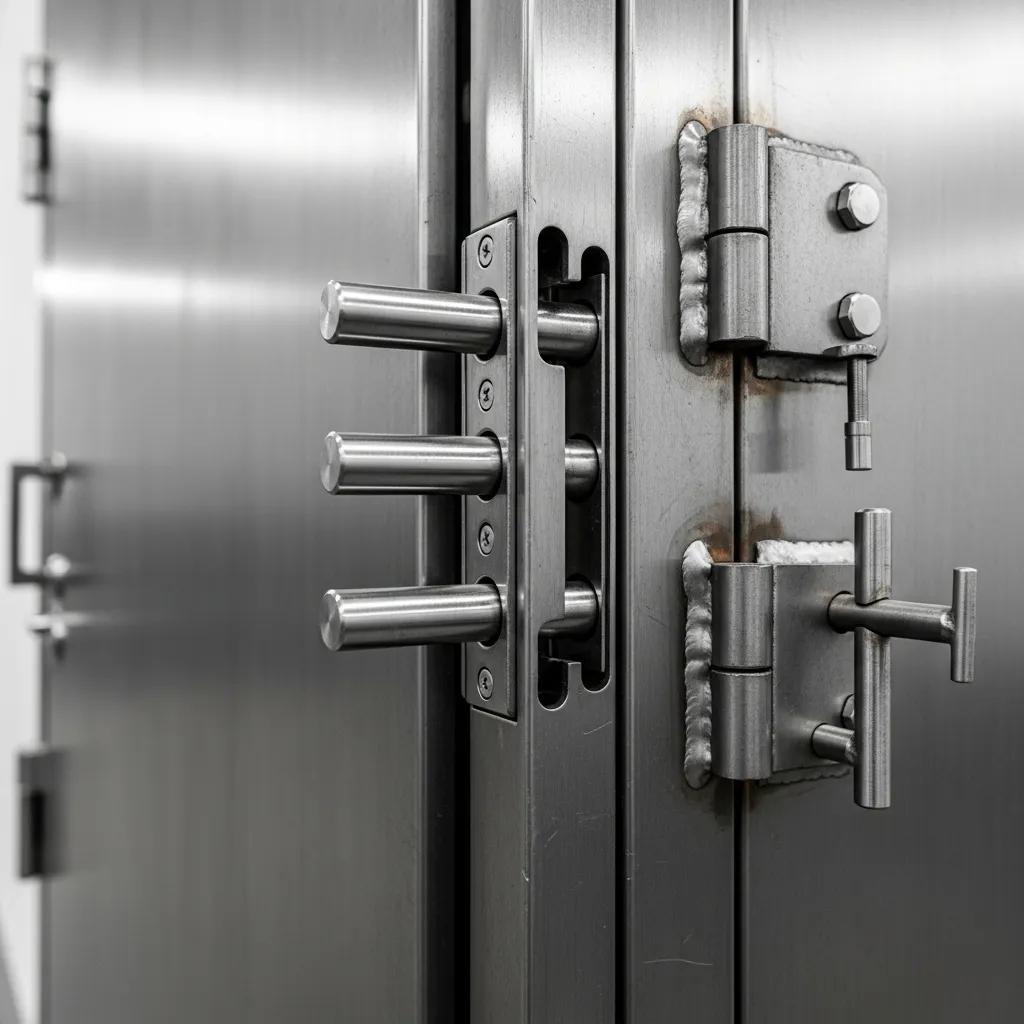
The key security features of metal doors in Miami include:
The robust construction and advanced features of these doors are crucial for protecting properties, as detailed in studies on high-security installations.
High-Security Doors: Protection Against Forced Entry & Attacks
Protecting critical facilities is key to keeping society safe and functioning. This paper summarizes the tools and options for the active and passive protection of civil and military critical infrastructure. We highlight the protection systems that can provide solutions for the complex security of high-profile facilities. We examine the risk factors and examine the options for protection against blast attacks, and summaries the security changes that can be made to each structure to greatly improve the resilience of high-profile facilities and the survival of their occupants. We present the devices and explosive techniques that can be used to forcibly open high-security doors and windows, which can help to recapture the protected object and to realize the perpetrators.
Preventing Attacks on Key Installations or Recapturing Them by Forced Entry, 2024
- Enhanced Durability: Metal doors are constructed to withstand harsh weather conditions and resist forced entry.
- Superior Impact Resistance: They are designed to endure impacts from wind-borne debris and other environmental threats.
- Corrosion-Resistant Materials: Coatings like G90 galvanization protect against corrosion from salty air.
- Reinforced Frames: These provide additional strength and security against tampering and forced entry.
- Tamper-Resistant Locks: Advanced locking mechanisms enhance security.
- Multi-Point Locking Systems: These distribute force across the door panel, increasing resistance to forced entry.
- Optional Bullet-Resistant Cores: For added protection against more severe threats.
- Compliance with Local Safety Standards: Such as Miami-Dade County NOA for impact resistance and NFPA 80 for fire resistance.
Which Locking Mechanisms and Hardware Improve Door Security?
Locking mechanisms and hardware that improve door security include:
- Multi-Point Deadbolts: Engage at multiple points (top, middle, bottom) to create a secure seal and distribute force against forced entry.
- Anti-Kick Plates: Reinforce the door against kick-in attacks.
- Electronic Latch Monitors: Signal tampering attempts.
- Integrated Keyless Entry Systems: Use encrypted PIN codes or RFID badges for access control.
- Reinforced Frames: Include steel channels and plate inserts to eliminate leverage points for burglars.
- Tamper-Proof Hinges: Use concealed pins or special fasteners to prevent door removal.
- Reinforced Strike Plates: Work with multi-point locking systems to thwart break-in attempts.
How Does Access Control Integration Work with Metal Doors?
Access control integration with metal doors works by incorporating advanced security features such as embedded electric strikes, magnetic locks, and reinforced steel plates. These allow for the installation of keyless entry systems, biometric scanners, and other access control technologies without compromising the door’s structural integrity. This integration enhances security by enabling real-time monitoring, entry logging, and remote lockdown capabilities, thereby creating a multi-layered security system that deters unauthorized entry and promotes accountability.
How Metal Doors Enhance Commercial Security and Durability in Miami
In Miami, commercial metal door installation costs typically range from $800 to $2,500 per door, including installation. Factors affecting the cost include door type, size, additional features, and installation specifics. Metal doors are suitable for commercial use due to their durability, security features, and ability to withstand harsh weather conditions. They can also be energy-efficient due to their insulation properties. Regular maintenance is required to ensure their longevity, which can last 20-30 years with proper care. Customization options are available through companies like Oratso Corp, which also provides installation services.
What Are the Typical Costs for Metal Door Installation in Miami?
The costs for metal door installation in Miami can vary significantly based on several factors, including the type of door selected, its size, and any additional features required. Generally, the installation costs can be broken down as follows:
How Does Oratso Corp Ensure Quality Installation and Compliance?
Oratso Corp ensures quality installation and compliance by adhering to NFPA 80 protocols and local building codes during every inspection and installation. Their technicians use detailed checklists that cover labels, clearances, hardware, glazing, and seals. Compliance assurance includes providing stamped inspection certificates and properly archived documentation to support regulatory audits and insurance requirements. Additionally, they focus on using high-quality materials and techniques, and all technicians are licensed and insured, which further guarantees safety and quality in their services.
How Do Miami Building Codes and Regulations Affect Metal Door Selection?
Miami building codes and regulations significantly affect metal door selection by requiring compliance with specific safety standards. Commercial metal doors must meet Miami-Dade County Product Approval (NOA) for impact resistance, Florida Building Code fire door assemblies (NFPA 80), and ADA clearances for accessibility. This ensures that the doors provide adequate protection against fire and hurricane impacts, which are critical in Miami’s climate. Additionally, adhering to these regulations can facilitate smoother permit approvals and may qualify businesses for insurance credits, ultimately influencing the choice of metal doors based on safety, durability, and long-term value.
What Are the Florida Building Code and NFPA-80 Requirements?
The Florida Building Code and NFPA 80 requirements include:
- NFPA 80 Requirements:Annual inspection of fire door assemblies to confirm:Presence and legibility of fire-rating labels.Proper clearances (maximum 1/8-inch gaps around the door leaf).Full functionality of self-closing devices and latches.Intact and undamaged intumescent and smoke seals.Unobstructed operation without binding or sticking.
- International Fire Code (IFC) Complement:Links fire door inspection compliance to occupancy permits and fire department approvals.Requires correction of fire door deficiencies identified during inspections within specified timeframes.
- Local Building Codes in South Florida and the Caribbean:Reference both NFPA 80 and IFC.Include region-specific requirements for hurricane-rated assemblies and post-storm inspections.May impose additional measures for windborne debris and hurricane exposure, such as notified product approvals (NOAs) and hurricane impact ratings.
Detailed documentation, including inspection reports and certification records, is essential for compliance with both national standards and local authorities.
Further emphasizing the importance of these regulations, research highlights the detailed analysis required for fire and life safety compliance in various building types.
NFPA Standards for Building Fire Resistance & Safety
The report’s initial portion provides a prescriptive-based analysis using applicable sections of the 2016 California Building Standard Codes and National Fire Protection Association (NFPA) standards. Because of the unique challenges to hazardous laboratory spaces, the prescriptive- based analysis includes both a review of codes applicable to all occupancies (e.g., egress, fire-resistance, building area), and codes applicable to Group H and L occupancies (e.g., electrical area classification maps, control areas). Unfortunately, detailed data of building drawings and material lists were limited. Thus, only a general analysis was possible in many areas.
Research Laboratory: Fire, Explosion, and Life Safety Analysis, 2020
How Do ADA and ANSI Standards Influence Door Design?
ADA and ANSI standards influence door design by ensuring that doors meet accessibility requirements and performance criteria. Specifically, compliance with ADA and ANSI A117.1 accessibility codes ensures that doors are designed to be accessible to individuals with disabilities, promoting inclusivity. Additionally, adherence to ANSI standards, such as A156.2 for door hardware, ensures that the doors meet specific quality and safety benchmarks, contributing to overall reliability and functionality in various building applications.
How Can You Maintain and Customize Metal Doors for Longevity in Miami?
To maintain and customize metal doors for longevity in Miami, you should:
- Regular Maintenance: Conduct routine cleaning, lubrication, and inspections to prevent corrosion and ensure optimal performance in the humid climate. This includes checking for rust, lubricating moving parts, and replacing worn weatherstripping.
- Protective Coatings: Apply protective coatings, such as G90 zinc or epoxy powder coats, to enhance corrosion resistance and durability.
- Customization Options: Utilize customization options available, such as custom sizes, finishes, and hardware, to meet specific requirements and enhance the door’s functionality and appearance.
- Address Common Issues: Be proactive in addressing common issues like stiff hinges and locks, and ensure that weatherstripping is intact to maintain airtight seals.
- Professional Services: Consider professional services for repairs and maintenance, such as those offered by Oratso Corp, which include on-site restoration and emergency repairs.
What Are Best Practices for Metal Door Maintenance in South Florida?
Best practices for metal door maintenance in South Florida include:
- Regular Cleaning: Clean frames and panels to remove salt spray and debris that can cause corrosion.
- Protective Coatings: Apply protective coatings to prevent degradation from humidity and salt exposure.
- Lubrication: Regularly lubricate hinges and locks to ensure smooth operation and prevent stiffness.
- Inspection: Conduct routine checks for signs of wear, such as cracked weatherstripping or rust.
- Tightening Fasteners: Ensure all fasteners are tight to maintain structural integrity.
- Weatherstripping Replacement: Replace worn weatherstripping to maintain airtight seals against air and water.
What Customization Options Are Available for Metal Doors?
Customization options for metal doors in Miami include:
- Custom Sizes: Up to 48 × 96 inches and tailored shapes for arches or sidelights.
- Finishes: Options like G90 zinc coating, epoxy powder coats, and anti-graffiti finishes.
- Hardware: Various hardware options can be integrated, including electric strikes and magnetic locks.
- Design: Modular frame systems that adapt to field-measured openings.
- Specialized Features: Sound-attenuating cores, vandal-resistant, and antimicrobial options for specific industries.