
Hollow Metal Door Features That Enhance Security
Elevate Security with Hollow Metal Doors
Vulnerable entry points are a significant risk, accounting for over 60 percent of commercial break-ins. That’s why robust hollow metal door features are crucial for safeguarding your assets and people. This guide breaks down how heavy-gauge steel, reinforced cores, and expertly welded seams work to thwart forced entry. We’ll also explore advanced hardware—from multi-point locks to integrated access control systems—that significantly boost your perimeter defense. You’ll gain insights into fire-, bullet-, and blast-resistant constructions that meet stringent UL and NFPA standards, understand the importance of ANSI and SDI certifications, and learn how professional installation and ongoing maintenance by Oratso Corp ensure lasting performance. We conclude with practical comparisons for commercial and residential applications, clear answers to common security questions, and essential maintenance best practices. By examining core construction features, hardware components, specialized threat resistance, industry benchmarks, and local expertise in South Florida and the Caribbean Islands, you’ll fully grasp what makes a hollow metal door a superior security solution.
What Core Construction Features Make Hollow Metal Doors Secure?
Hollow metal doors achieve exceptional security through a strategic combination of steel gauge, internal core materials, welded reinforcements, and heavy-duty frames. Steel gauge refers to the thickness of the sheet metal: a lower gauge number signifies thicker steel, which is far more resistant to impact and tools. Cores—such as honeycomb, polystyrene, or steel-stiffened designs—provide essential rigidity, while welded seams and internal stiffeners eliminate potential weak points. Finally, reinforced steel frames anchor doors securely to the surrounding structure, preventing frame deformation under duress.
Thicker steel gauge, combined with welded internal stiffeners and reinforced edges, creates a door surface that effectively deflects prying tools and battering attempts. Understanding these fundamental construction attributes lays the groundwork for appreciating the advanced hardware options designed to further enhance your perimeter defense.
How Does Steel Gauge Impact Hollow Metal Door Security?
Steel gauge precisely indicates the thickness of the sheet steel used. For instance, a 16-gauge door has approximately 0.060 inches of steel per skin, whereas an 18-gauge door has 0.045 inches. Thicker steel skins offer superior resistance to cutting, punching, and bending. For high-security applications—such as data centers and government facilities—opting for 16-gauge or even 14-gauge steel provides significantly enhanced forced-entry resistance, minimizing deformation under impact and extending the door’s service life through repeated rigorous use.
What Core Materials Are Used to Reinforce Hollow Metal Doors?
The choice of core materials is critical for defining rigidity and insulation properties. Common options include: oratsocorp
- Honeycomb: Crafted from corrugated kraft paper arranged into cells, offering excellent compression resistance.
- Polystyrene: A high-density foam that provides effective thermal efficiency and moderate structural strength.
- Steel-stiffened: Features solid steel channels or plates welded between the door skins for maximum rigidity.
- Ballistic inserts: Incorporates fiberglass or specialized ballistic armor layers designed to stop projectiles.
How Do Reinforcements Strengthen Hollow Metal Door Security?
Internal steel stiffeners, perimeter seams that are fully welded, reinforced strike plates, and hardened corner welds work in concert to create continuous load paths that effectively dissipate impact forces. Stiffeners, typically channel sections, are attached vertically and horizontally within the door cavity to prevent panel flex and concentrate reinforcement at critical areas like lock cutouts and hinge locations.
Why Are Reinforced Steel Door Frames Critical for Security?
A door’s security is fundamentally limited by the strength of its frame. Reinforced frames utilize thicker steel profiles, continuous welds, and heavier-duty anchors that effectively transfer force directly into the surrounding wall structure. Secure anchoring—achieved through expansion bolts or welding—is essential to prevent frame pull-out or distortion when subjected to forceful prying or ramming attacks.
Which Advanced Hardware Components Enhance Hollow Metal Door Security?
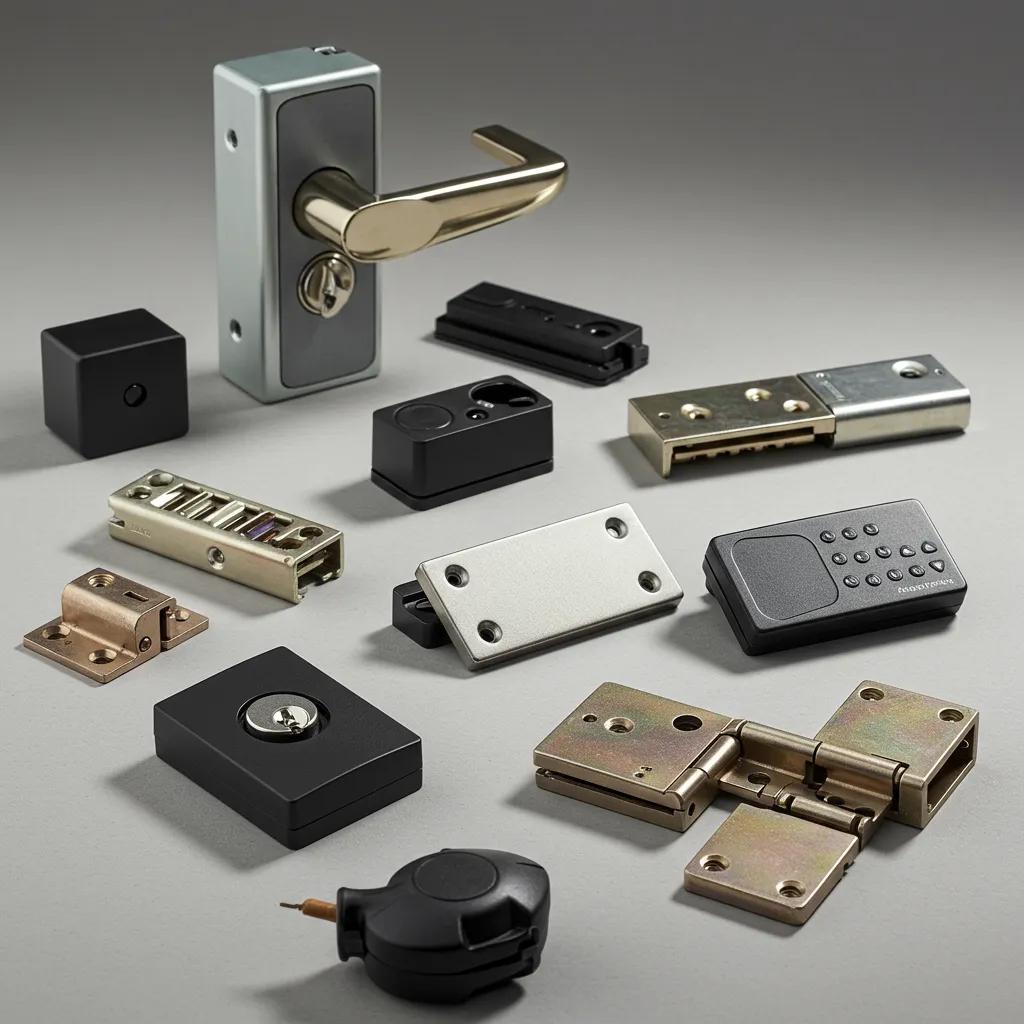
High-security hollow metal doors are designed to integrate advanced locks, hinges, panic devices, and access control systems, creating a multi-layered defense strategy. Mortise and cylindrical locks featuring anti-drill and anti-pick mechanisms secure the latch area, while multi-point latching systems engage the door at several points to resist prying. Security hinges equipped with non-removable pins or continuous gear designs prevent hinge removal. Panic hardware facilitates immediate emergency egress while maintaining locked perimeter security under normal conditions. Sophisticated electronic systems—including keycards, PIN pads, and biometric scanners—enable access control trails and precisely timed access control.
- Mortise locks provide robust bolt mechanisms, often certified to ANSI Grade 1 standards.
- Deadbolts and multi-point systems ensure secure engagement at the top, center, and bottom of the door.
- Electronic access control systems can be seamlessly integrated into steel lock bodies for streamlined installations.
- Panic devices comply with critical life-safety codes while maintaining robust security during regular operation.
By combining mechanical and electronic hardware layers, each component reinforces the others, creating a comprehensive door system that effectively resists common attack vectors and aligns with both security objectives and building code requirements.
What Are the Best Locking Mechanisms for High-Security Hollow Metal Doors?
The most reliable locking options include high-security mortise locks (ANSI Grade 1 certified), cylindrical locks with hardened inserts, multi-point latches activated by a single key turn, and electronic strikes integrated with advanced access control panels. These systems offer superior pick-resistance, drill-resistance, and multiple engagement points for significantly enhanced security.
How Do Security Hinges Prevent Tampering and Forced Entry?
Security hinges are engineered with non-removable pins, high-performance ball bearings for exceptionally smooth operation, and continuous hinge designs that span the entire length of the door. These features effectively deter hinge pin removal and distribute shear forces evenly along the entire leaf, preventing prying attacks and hinge exploitation.
What Role Does Panic Hardware Play in Secure Hollow Metal Doors?
Panic hardware is designed to provide immediate and safe egress during emergency situations while maintaining secure locking under normal operating conditions. Rim or concealed vertical rod panic devices can be integrated with fire-rated hollow metal doors to meet stringent life-safety codes without compromising forced-entry resistance.
How Are Integrated Access Control Systems Used in Hollow Metal Doors?
Keycard readers, PIN pads, and biometric scanners can be mounted directly onto door surfaces or adjacent mullions and are connected to electromechanical locks or magnetic strikes. These systems offer precise timed access, maintain detailed audit logs, and allow for remote locking commands—making them ideal for commercial facilities that require granular access management and control.
Unlocking Maximum Security: Key Hollow Metal Door Features
Hollow metal doors can be specifically engineered to resist fire, bullets, and blasts through the use of specialized materials, advanced assembly techniques, and rigorous testing standards. Fire-rated models incorporate mineral-filled cores, intumescent seals, and thicker steel skins to maintain structural integrity under extreme heat. Bullet-resistant doors utilize cold-rolled steel plates, ballistic armor cores, and laminated interlayers tested to meet specific UL 752 levels. Blast-resistant assemblies are constructed with monolithic steel plates, heavily reinforced frames, and pressure-diversion systems validated against demanding military or industrial blast criteria.
What Fire Ratings Do Hollow Metal Doors Offer and Why Are They Important?
Fire-rated hollow metal doors achieve ratings from 20 minutes up to 3 hours by incorporating specialized fire-resistant cores, intumescent seals, and thicker steel skins. Adhering to UL 10C and NFPA 80 standards, these doors effectively prevent the spread of flames and smoke, provide crucial time for occupant evacuation, and maintain structural integrity during a fire.
How Are Bullet-Resistant Hollow Metal Doors Rated and Applied?
Bullet resistance is precisely measured by UL 752 levels, with each level corresponding to specific projectile types and velocities. These doors are constructed with ballistic steel plates, layered interlayers, and reinforced frames designed to stop rounds from handguns up to high-powered rifles, offering critical protection in vulnerable locations.
What Engineering Makes Blast-Resistant Hollow Metal Doors Effective?
Blast-resistant systems are engineered using heavy monolithic steel plates, energy-absorbing anchor systems, and robust reinforced perimeter seals. Tested against stringent military or industrial blast criteria, these doors are designed to flex under extreme pressure without fracturing and then return to their closed position, maintaining security even after a significant event.
Which Industry Standards and Certifications Ensure Hollow Metal Door Security?
Compliance with established industry standards—including UL, ANSI, SDI, and NFPA—is your assurance of superior material quality, rigorous testing integrity, and reliable performance. Underwriters Laboratories (UL) certifies fire and bullet resistance ratings, ANSI/SDI A250.8 provides specifications for design and fabrication tolerances, and NFPA 80 mandates specific installation and maintenance protocols for fire-rated doors. Collectively, these certifications validate that hollow metal door assemblies meet the most demanding safety and security benchmarks.
- UL 10C: Standard for fire endurance testing of door assemblies.
- UL 752: Standard for ballistic resistance testing levels.
- ANSI/SDI A250.8: Standard for fabrication of steel doors and frames.
- NFPA 80: Standard for the installation and maintenance requirements for fire doors.
For specialized applications, such as detention facilities, enhanced protection is achieved through the use of heavy gauge covers and specialized security screws.
Detention Security Hollow Metal Doors: Heavy Gauge Protection
The door or frame is protected by a heavy gauge cover plate fastened with security screws. Heat treatment is not required for the steel used in the detention hollow metal construction. GUIDE SPECIFICATIONS FOR DETENTION SECURITY HOLLOW METAL DOORS AND FRAMES
What Are the Key UL, ANSI, SDI, and NFPA Standards for Hollow Metal Doors?
The most critical certifications include UL 10C for fire endurance, UL 752 for bullet resistance, ANSI/SDI A250.8 for fabrication tolerances, and NFPA 80 for installation and maintenance guidelines essential for preserving fire-rated integrity.
How Do These Standards Impact Door Performance and Safety?
Meeting the rigorous criteria set by UL, ANSI, SDI, and NFPA ensures that doors consistently maintain structural integrity under fire, ballistic, or blast conditions, comply with all relevant building codes, and deliver verified, dependable security performance.
Why Choose Oratso Corp for Hollow Metal Door Security Solutions in South Florida and the Caribbean?
Oratso Corp offers comprehensive, end-to-end hollow metal door solutions—encompassing sales, expert installation, and reliable repair services—for both commercial and residential clients throughout South Florida and the Caribbean Islands. Our specialized expertise in security-grade constructions, custom aesthetics, and adherence to regional codes ensures that Oratso Corp delivers doors that perfectly balance durability, design, and critical life-safety requirements.
Oratso Corp’s distinctive value is built upon:
- In-depth, localized expertise for coastal and tropical climates.
- Custom engineering capabilities to meet unique security and aesthetic demands.
- Full lifecycle support, from initial product selection through ongoing maintenance plans.
- An unwavering commitment to UL, ANSI, and NFPA compliance for every single installation.
How Does Oratso Corp Customize Hollow Metal Doors for Security and Aesthetics?
Oratso Corp collaborates closely with clients to meticulously select steel gauges, core materials, finishes, and hardware that precisely align with their specific security objectives and brand identity. This ensures each door not only provides maximum protection but also integrates seamlessly into the building’s overall architectural design.
What Professional Installation Services Does Oratso Corp Provide?
Oratso Corp’s team of expert installers guarantees precise frame alignment, optimal seal integrity, and flawless hardware calibration. Proper installation is paramount to preventing performance issues, maintaining critical fire-rated clearances, and ensuring all hardware functions exactly as tested and intended.
How Does Oratso Corp Support Maintenance and Repair for Long-Term Security?
Through routine inspections, expert hinge lubrication, timely seal replacement, and precise hardware adjustments, Oratso Corp actively preserves all security features and significantly extends the door’s operational lifespan. Prompt repairs of any dents, corrosion, or mechanical wear ensure the door continues to offer robust resistance to forced entry.
What Are Common Questions About Hollow Metal Door Security Features?
Security professionals and property managers frequently inquire about which specific attributes deliver the greatest protection and how to best match features to diverse applications. Below, you’ll find clear, concise explanations designed to guide your informed decisions and optimize your security investments.
What Makes a Hollow Metal Door More Secure Than Other Door Types?
A hollow metal door’s superior security stems from its construction: thick steel skins, reinforced internal cores, expertly welded seams, and robust frames collectively outperform wood or fiberglass alternatives in terms of forced-entry resistance, impact durability, and long-term structural integrity under repeated use.
What Is the Strongest Steel Gauge for Hollow Metal Doors?
14-gauge steel offers the maximum resistance to bending and cutting, while 16-gauge provides an excellent balance of strength and cost-effectiveness. For high-traffic areas or critical security zones, 14-gauge is the preferred choice; 16-gauge is typically standard for general commercial applications.
Which Lock Types Are Best for Commercial Hollow Metal Doors?
Mortise locks rated ANSI Grade 1, advanced multi-point locking systems, and cylindrical locks featuring anti-drill mechanisms offer the highest levels of security. For regulated facilities, electronic locks with audit-trail capabilities provide essential administrative control.
Are Hollow Metal Doors Fire Rated and How Does That Affect Security?
Most hollow metal doors can be fire-rated from 20 minutes to 3 hours, certified under UL 10C and NFPA 80 standards. A fire rating adds crucial thermal barrier properties without compromising forced-entry resistance, making them ideal for corridors, stairwells, and fire-separation walls.
How Can Hollow Metal Doors Be Reinforced for Maximum Security?
Adding internal steel stiffeners, reinforced strike plates, ballistic armor inserts, and multi-point latching systems elevates standard hollow metal doors into high-security assemblies capable of resisting pry tools, projectiles, and even blast pressures.
How Does Proper Maintenance Enhance the Security of Hollow Metal Doors?
Consistent, proactive maintenance is essential for preserving every security feature—from the integrity of the steel to the flawless function of the hardware—and preventing minor issues from evolving into significant vulnerabilities. Regular door inspections, diligent hinge lubrication, timely seal replacement, and thorough hardware testing ensure that locking mechanisms operate smoothly and structural components effectively resist forced-entry attempts.
What Maintenance Practices Prevent Security Failures in Hollow Metal Doors?
Implementing regular lubrication for hinges and locks, conducting inspections of welded seams for any signs of cracking, testing panic hardware functionality, and promptly replacing worn seals are key practices that prevent mechanical failures and maintain essential fire and smoke barriers.
When Should You Schedule Professional Repair Services for Hollow Metal Doors?
You should schedule professional repair services immediately if you notice any door sagging, paint corrosion, loose hardware, visible dent damage near lock areas, or any difficulty in operating panic devices. Prompt intervention by Oratso Corp is crucial for preventing escalating security risks.
How Do Hollow Metal Door Security Features Compare Across Different Applications?
Security requirements naturally vary significantly by application. Commercial hollow metal doors used in retail or office buildings typically emphasize robust forced-entry resistance and sophisticated aesthetic finishes. Residential installations aim to balance security with design, often incorporating decorative steel skins and moderate gauge cores. Fire-rated doors in multi-family housing and institutional settings must meet specific UL and NFPA clearances. Blast-resistant assemblies are reserved for critical infrastructure, demanding higher gauge steel and heavily reinforced frames.
- Commercial: Typically feature 16-gauge steel, multi-point locks, and keyed access systems.
- Residential: Often utilize 18-gauge steel with decorative finishes, supplemented by heavy-duty deadbolts and security hinges.
- Fire-rated: Offer 20- to 90-minute ratings and incorporate essential intumescent seals.
- High-security: Constructed with 14-gauge steel, ballistic inserts, and advanced electronic access control.
What Security Features Are Essential for Commercial Hollow Metal Doors?
Commercial doors significantly benefit from lower gauge steel, multi-point latching systems, electronic access control integration, and ANSI Grade 1 locks to effectively resist tampering and support high traffic volumes.
How Do Residential Hollow Metal Doors Differ in Security Features?
Residential hollow metal doors frequently prioritize decorative finishes and moderate gauge cores, enhanced by heavy-duty deadbolts, security hinges, and reinforced frames suitable for suburban and condominium applications.
What Are the Benefits of Fire-Rated Hollow Metal Doors in Various Settings?
Fire-rated hollow metal doors provide critical time for occupant evacuation, effectively compartmentalize smoke and heat, and maintain structural integrity during fire events—making them indispensable in corridors, stairwells, and exit enclosures.
The sophisticated engineering behind blast-resistant hollow metal doors is specifically designed to withstand significant explosive overpressure, ensuring paramount safety in high-risk environments.
Blast Performance of Hollow Metal Steel Doors
The goal was to provide practicing engineers with a methodology to analyze the blast performance of hollow metal doors and to support the development of blast resistant hollow metal doors. Blast performance of hollow metal steel doors, 2019
Oratso Corp warmly invites you to request a personalized consultation or a detailed quote to explore our extensive range of hollow metal door options, all meticulously tailored to your specific security needs and architectural style. Our dedicated experts will expertly guide you through every step, from selecting the optimal gauge and core materials to integrating the perfect hardware and ensuring full code compliance, ultimately delivering a secure, reliable, and aesthetically pleasing entry system.