
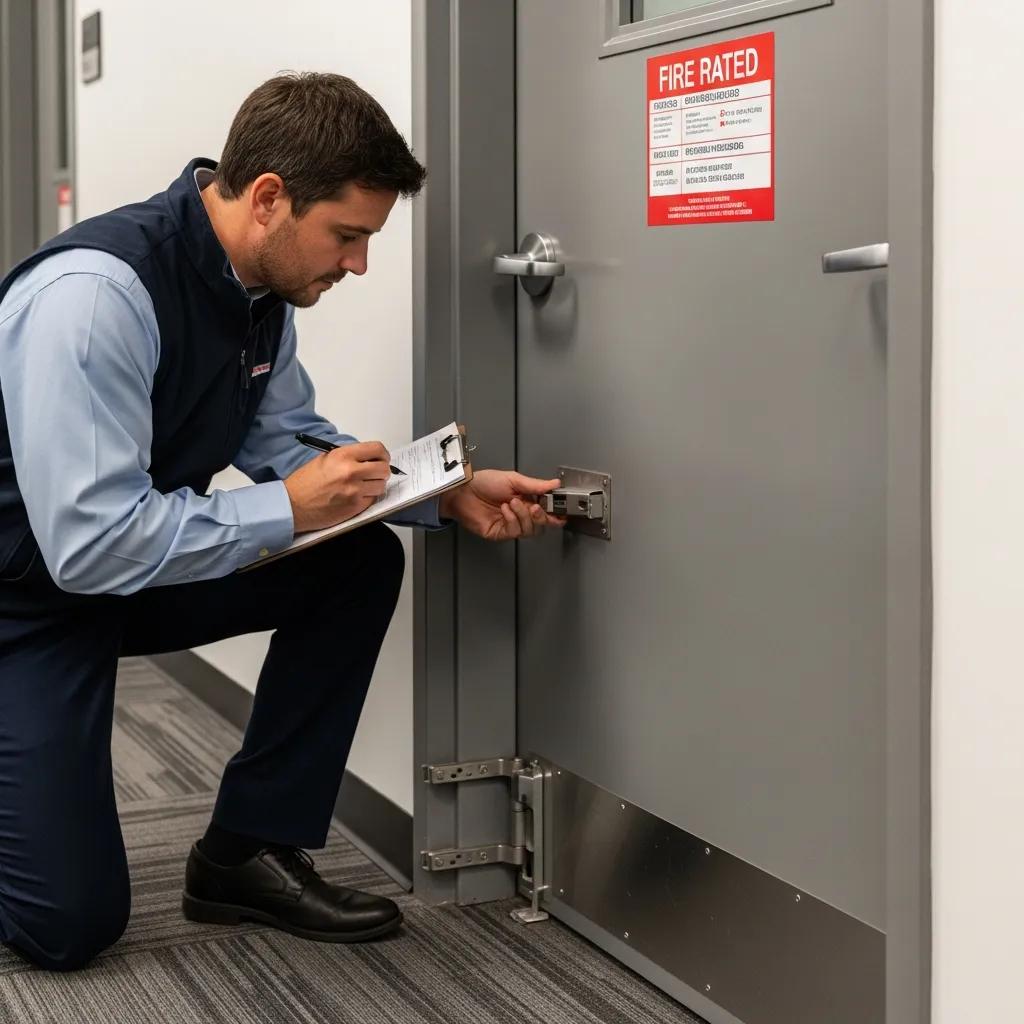
Annual Miami Fire Door Inspection & Certification
Ensuring Fire Door Safety and Compliance in Miami
Annual fire door inspection is the scheduled, systematic evaluation of fire-rated doors to verify they function as intended under NFPA 80 and Florida code requirements, and to preserve life-safety, compartmentation, and egress integrity. This article explains why annual fire door inspections are mandatory in Miami, how inspections are performed, what certification and labeling mean for compliance, and which sales, installation, repair, and maintenance options are available for commercial properties. Facility managers, property owners, and safety officers will learn the specific checklist items inspectors evaluate, the reporting and correction workflow, and how recognized certifications and field labeling preserve approved assemblies. The guide also covers local enforcement practices in Miami-Dade County, who is qualified to perform inspections, and the business services that support inspection findings, including emergency repairs and hurricane-rated door options. Read on for practical steps, checklists, comparison tables, and clear next actions you can use to maintain compliant fire door assemblies across Miami and South Florida.
Why Are Annual Fire Door Inspections Mandatory in Miami?
An annual fire door inspection verifies that fire doors and their assemblies retain the tested fire-resistance performance, ensuring that doors continue to limit fire and smoke spread and protect occupant egress. The mechanism is straightforward: inspections confirm that parts such as door closers, latching mechanisms, intumescent seals, and labels remain intact and properly installed so the assembly behaves like the tested unit in a fire event. The primary benefit is life-safety—functional fire doors maintain compartmentation and provide time for safe evacuation while reducing property loss. Local enforcement and building codes map national standards to Miami practices, making annual inspection a regulatory expectation rather than a discretionary maintenance item. Understanding the specific requirements and enforcement risks helps owners prioritize inspections and corrective actions.
What Are the NFPA 80 and Florida Fire Code Requirements for Fire Doors?
NFPA 80 requires that fire door assemblies receive periodic inspections and testing to verify the operational integrity of components and that openings are properly maintained, typically on an annual frequency for door assemblies. The Florida Building Code and Fire Prevention Code adopt NFPA 80 provisions and direct building owners and responsible parties to maintain assemblies per the standard, which includes checking labels, clearances, and hardware functionality. Inspectors compare the installed assembly to the tested assembly documentation and note any alterations or mismatched hardware that could void the label; this mapping ensures assemblies remain equivalent to their tested configuration. In practice, Miami enforcement aligns local AHJ expectations with NFPA 80, meaning annual certified inspections and accurate documentation are essential for compliance and AHJ acceptance.
As further detailed by industry standards, the core principles of fire door integrity are rooted in specific test criteria and ongoing compliance with NFPA 80.
NFPA 80 Requirements for Fire Doors & Opening Protectives
with the requirements of NFPA 80, Standard for Fire Doors and Other Opening Protectives. The acceptance criteria for fire-protection rated assemblies, such as fire doors, are established through specific test criteria.
PROTECTION OF OPENINGS IN FIRE RATED ASSEMBLIES, 2012
What Are the Consequences of Non-Compliance for Commercial Properties?
Failing to perform required annual inspections or to correct documented deficiencies can lead to formal enforcement actions, insurance complications, and increased liability exposure for property owners and managers. Common consequences include notices of violation from the AHJ, orders to repair or replace non-compliant assemblies, costly emergency replacements, and potential fines or business interruptions until corrections are verified. Insurance carriers may cite lack of documented maintenance as a factor that affects coverage or claim settlements after a loss, increasing financial risk for owners. To mitigate these outcomes, the recommended path is prompt inspection, prioritized repairs, and retention of certified reports for AHJ and insurer review as proof of due diligence.
What Does Oratso Corporation’s Certified Fire Door Inspection Process Include?

A certified fire door inspection process typically begins with an on-site evaluation by a qualified inspector, who records the condition of the door assembly, verifies the fire-rating label, and tests functional hardware against NFPA 80 acceptance criteria. Inspectors classify deficiencies by severity, photograph issues, and provide an organized report that includes recommended repairs, parts needed, and an estimated timeline for correction and recertification where required. Oratso Corporation coordinates inspections and can assist with repair estimates and scheduling; their service messaging emphasizes FREE Estimates and responsive service for South Florida clients. After repairs, field labeling or documentation updates are provided to demonstrate the restored compliance status to the AHJ and property records.
Below is a concise Entity-Attribute-Value table summarizing typical inspection items and acceptance criteria; it presents the 12 inspection items in a clear, tabular format for facility managers and safety teams.
Which Key Components Are Evaluated in the 12-Point Inspection Checklist?
The 12-point checklist focuses on essential meronyms of the door assembly, evaluating the label, clearances, closers, latching hardware, hinges, seals, glazing, thresholds, frame, signage, alterations, and hardware compatibility. Each item is checked for presence, condition, correct installation, and whether it matches the tested assembly; a failure in any critical component can compromise the rated performance. Inspectors look for common failure modes such as missing intumescent seals, improper gap tolerances, non-functioning closers, altered cutouts, and mismatched hardware that lacks listing. The checklist is compact yet comprehensive to ensure the assembly still represents the tested configuration and to provide clear remediation instructions when deficiencies are found.
Fire door inspections evaluate twelve core components, each with a one-line acceptance example:
- Door label present and legible.
- Head and jamb clearances within tolerances.
- Closer functions and ensures full close.
- Latch fully engages with strike.
- Hinges secure and not worn.
- Intumescent seals continuous and intact.
- Fire-rated glazing labeled and secured.
- Listed hardware only; no unauthorized changes.
- Threshold seals installed for smoke control.
- Frame free of damage that alters performance.
- Egress signage visible and correct.
- No unapproved alterations to the assembly.
How Are Inspection Reports and Deficiency Corrections Handled?
Inspection reports are delivered as structured documents that include photos, a prioritized deficiency list, recommended corrective actions, and a severity rating to guide urgent repairs versus routine maintenance. Typical workflows move from onsite inspection to a detailed report, followed by a repair estimate and scheduling option for field repair or component replacement; major alterations may trigger laboratory re-certification or replacement of the assembly. Owners receive documentation suitable for AHJ review and insurance records, and post-repair follow-up inspects corrections and updates field labels when repairs restore equivalence to the tested assembly. Clear timelines and documented corrective steps reduce liability and help facilities restore certified status efficiently.
How Does Fire Door Certification and Labeling Ensure Compliance in Miami?
Fire door certification and labeling function as the documented link between the tested assembly (lab-tested to a specific standard) and the installed assembly in the field, communicating fire-resistance ratings and listed components to inspectors and AHJs. Labels indicate the fire-rating in minutes and the testing/listing organization, while field labeling and recertification document repairs or modifications that preserve the assembly’s rated behavior. Recognized certification pathways include third-party test labs and industry bodies that produce traceable documentation proving the assembly’s performance; these records are critical during AHJ inspections and insurance audits. Understanding certification types helps owners choose appropriate recertification or labeling approaches after repairs.
Why Is Proper Fire Door Labeling Important for Safety and Certification?
Proper labeling communicates the tested fire resistance rating—commonly 20, 45, 60, 90, or 180 minutes—and identifies the listed configuration, which allows inspectors to confirm the installed assembly matches the tested one. Missing, altered, or non-matching labels create immediate compliance risk because they prevent the AHJ from verifying that the assembly is equivalent to the tested configuration; that gap can lead to enforcement actions. Labels are inspected along with hardware and seals; if hardware changes are incompatible with the label, the assembly may need repair or replacement. Ensuring labels are intact and documentation is available short-circuits disputes with AHJs and supports insurance and safety records.
The critical role of labeling in fire door assemblies is underscored by the fact that fire-protection ratings are derived from rigorous fire tests, with NFPA 80 mandating the use of only labeled, fire-rated glazing.
Fire Door Assembly Labeling & NFPA 80 Compliance
determine the fire-protection rating of a fire door assembly. Fire door assemblies are given a fire-protection rating based on the results of a fire test. NFPA 80 now requires that only labeled fire-protection rated or fire-resistance rated glazing be used in fire door assemblies.
PROTECTION OF OPENINGS IN FIRE RATED ASSEMBLIES, 2012
How Does Oratso Facilitate QAI Laboratory and DHI Certifications?
When laboratory involvement is required, Oratso Corporation coordinates documentation, logistics, and communication between the client, the testing laboratory, and certification bodies to streamline the recertification path. Their role includes assembling test samples or replacement assemblies, compiling pre-test documentation, and providing field labeling or certification paperwork for AHJ review when testing confirms compliance. Oratso’s service messaging emphasizes rapid response and assistance with paperwork to reduce turnaround and administrative friction. Clients receive organized documentation to present to AHJs and insurers, and Oratso can arrange rush shipping for replacement doors when expedited timelines are necessary.
What Fire Door Sales, Installation, Repair, and Maintenance Services Are Available in Miami?
Commercial properties in Miami can access a range of fire door products and services including sales of hollow metal and fire-rated wood doors, hurricane-rated fire door assemblies, professional installation services, emergency repairs, and preventative maintenance contracts. Proper installation integrates the door assembly with listed hardware and any access control systems while preserving the tested configuration; incorrect installation or incompatible hardware can void labels and create non-compliance. Preventative maintenance plans include scheduled inspections, lubrication, seal replacement, and functional testing to extend label validity and reduce unexpected failures. For urgent needs, rapid sourcing and rush shipping for common commercial assemblies reduce downtime and restore compliant operation quickly.
Which Types of Commercial Fire Doors Are Offered, Including Hurricane-Rated Options?
Commercial options include hollow metal fire doors that deliver robust fire resistance and durability, fire-rated wood doors that match interior design needs while meeting rating requirements, and hurricane-rated fire doors engineered to resist windborne debris and pressure while preserving fire performance where required. Hurricane-rated fire doors combine structural reinforcement, approved glazing systems, and tested hardware to meet both wind and fire criteria; these assemblies are particularly relevant in Miami’s coastal environment. Availability and rush shipping for standard commercial sizes reduce downtime for urgent replacements, and selecting the correct type ensures code compliance and long-term reliability.
How Does Preventative Maintenance Extend Fire Door Lifespan and Safety?
Preventative maintenance programs apply scheduled checks and minor repairs that stop small issues from evolving into compliance failures, including lubrication of moving components, replacement of worn intumescent seals, adjustment of closers to meet closing speed criteria, and periodic verification of label legibility. Regular servicing preserves the tested configuration and reduces the frequency of emergency repairs and unplanned replacements, which lowers lifecycle costs and maintains consistent protection for occupants. Maintenance contracts often include response SLAs and priority scheduling, which can be critical for high-occupancy commercial properties. Investing in preventative care keeps assemblies functioning as intended and supports ongoing AHJ and insurer documentation needs.
What Are the Benefits of Annual Fire Door Inspections for Miami Businesses?
Annual fire door inspections deliver measurable benefits: they protect life-safety by ensuring compartmentation and egress function, reduce regulatory and insurance risk by documenting compliance, and preserve asset value by extending door assembly lifespan through timely repairs. Inspections convert reactive maintenance into proactive risk management and provide facility managers with prioritized repair plans that minimize operational disruption. Documentation from certified inspections supports AHJ reviews and insurance audits, making it easier to demonstrate due diligence and avoid penalties. For businesses in Miami, where hurricane and coastal considerations add complexity, inspections also confirm that assemblies exposed to weather retain their protective features.
How Do Inspections Protect Life Safety and Property?
Inspections validate that critical components—door closers, latching hardware, intumescent seals, and thresholds—perform to prevent smoke and fire spread and to ensure doors operate during evacuation, which directly reduces risk of injury and property damage. For example, functioning intumescent seals limit smoke migration between compartments, and properly adjusted closers ensure doors latch reliably under emergency conditions, preserving the rated barrier. By catching worn seals, corrosion, or altered hardware early, inspections prevent assembly failures in a fire scenario and reduce the chance of catastrophic spread. Proactive inspection thus acts as a technical control that translates directly into lives saved and property preserved.
Key protections inspections provide:
- Maintain compartmentation and slow fire/smoke spread.
- Ensure doors operate reliably during egress.
- Identify and correct assembly alterations before failure.
- Provide evidence to support emergency response and insurance claims.
How Do Inspections Help Avoid Fines, Liabilities, and Insurance Issues?
Documented inspections create an auditable trail showing that the property owner or responsible party conducted required maintenance and addressed known deficiencies, which reduces legal exposure and supports insurance claim processes. Insurers and AHJs expect records demonstrating ongoing compliance; presenting certified inspection reports and repair receipts mitigates disputes about neglected maintenance following a loss event. When inspections identify deficiencies, timely remediation and subsequent documentation of corrections help avoid enforcement escalations such as notices or orders from local authorities. Maintaining a cycle of inspection, repair, and documented recertification is the most effective administrative control to limit fines and liability.
What Are Miami’s Specific Fire Door Safety Regulations and Compliance Guidelines?
Miami-Dade County applies the Florida Building Code and enforces NFPA 80-adopted provisions through local permitting and inspections; this layered regulatory environment means owners must satisfy state and county AHJ procedures while following national standards for inspection and maintenance. Local enforcement often emphasizes documented evidence, so inspection reports, repair records, and label legibility are critical when demonstrating compliance. AHJs in Miami-Dade typically look for unauthorized alterations, missing labels, and hardware mismatches as common violation triggers, and they follow procedural steps that include notice, required corrective action, and re-inspection. Preparing documentation and coordinating repairs with certified inspectors streamlines AHJ interactions and reduces rework.
How Do Miami-Dade County and Local Authorities Enforce Fire Door Codes?
Enforcement usually follows a predictable flow: an AHJ inspection or complaint leads to identification of violations, issuance of a notice requiring corrective action, and a timeline for remedies followed by re-inspection to verify compliance. Common enforcement triggers include altered assemblies (cutouts, additional hardware), missing or non-matching labels, and non-functioning latching or closing hardware that threatens egress. Timely, documented corrections reduce the likelihood of penalties and expedite re-approval from AHJs. Facility teams should coordinate certified inspection reports and repair documentation to present a coherent compliance package during enforcement processes.
Who Is Qualified to Perform Fire Door Inspections in Miami?
Qualified fire door inspectors typically hold recognized industry credentials or training aligned with NFPA 80 and accepted practices—these may include DHI-related training, Intertek or QAI-recognized field labeling competencies, or demonstrable experience assessing fire-rated assemblies for commercial properties. Companies performing inspections should carry appropriate insurance and offer organized reports with photographic evidence and remediation prioritization suitable for AHJ review. Verifying credentials and requesting sample reports helps owners confirm that an inspector’s documentation meets local AHJ expectations. Certified inspectors and organized reporting increase the likelihood that AHJs will accept the inspection as evidence of compliance.
For property owners seeking inspection, repair, or replacement services, Oratso Corporation provides inspection coordination, sales, repairs, and maintenance across South Florida and the Caribbean Islands, with messaging that includes Trusted to Deliver Excellence Since 2004, Outstanding products, Excellent customer service, 24/7 availability, FREE Estimates, and Best Price Guarantee. Oratso maintains a large inventory of commercial fire-rated hollow metal and wood doors and offers rush shipping options for urgent replacements.
- FREE Estimates: Contact Oratso Corporation for FREE Estimates on inspections and repair work.
- 24/7 Availability: Emergency response and after-hours support options are available.
- Best Price Guarantee: Pricing assurance paired with inventory and rush shipping for fast turnaround.
These service points are provided to assist decision-making after inspection findings and to streamline correction and documentation workflows.