

Elevating Building Safety: Your Guide to Fire-Rated Door Installation
Elevating Fire Safety: A Guide to Fire-Rated Door Installation
Fire-rated doors play a crucial role in enhancing safety within commercial and residential buildings. These specialized doors are designed to withstand fire for specified durations, providing essential protection against the spread of flames and smoke. In this comprehensive guide, we will explore the fire-rated door installation process, detailing what to expect from start to finish. Understanding this process is vital for ensuring compliance with safety regulations and protecting lives and property. We will cover the importance of fire-rated doors, preparation steps for installation, the installation procedures, post-installation services, and the costs associated with fire-rated door installation in Florida.
What Are Fire Rated Doors and Why Are They Essential?
Fire-rated doors are specially designed to withstand fire for specified durations, typically tested to standards like UL 10C and NFPA 252. They are essential for safety in commercial buildings as they help prevent the spread of fire and smoke, ensuring compliance with building codes and protecting lives and property. Common fire resistance ratings for these doors include 20, 45, 60, 90, and 180 minutes, with higher ratings providing greater protection and critical time for evacuation during a fire. Additionally, features like intumescent strips and reinforced steel panels enhance their effectiveness in fire containment.
Further emphasizing the importance of these safety measures, research highlights the global standards and certification processes that validate a fire door’s performance.
Fire Door Certification & International Testing Standards
Fire doors are passive devices to mitigate the consequences of fire, by preventing the spread of fire and smoke inside a building. Their certification provides the costumers with a performance label when subject to fire and heat. Various testing standards are available in various regions of the world (US, Europe, China) but on the essential they are in close agreement: the time dependent temperature profile that defines the thermal load. In Europe the relevant standards are: EN 1634-1; EN 13501-2; and EN 1363-1.
Certification of a Fire Door–An Overview, J Silva, 2025
For those considering fire-rated door installation, it is crucial to choose a reputable provider. Oratso Corp, with over 20 years of experience, specializes in fire-rated door installation and offers free estimates, ensuring that clients receive the best service tailored to their needs.
What Defines a Fire Rated Door?
A fire-rated door is defined by its ability to withstand fire for specified durations, typically tested to standards such as UL 10C and NFPA 252. Common fire resistance ratings for commercial steel doors include 20-minute, 45-minute, 60-minute, 90-minute, and 180-minute ratings, which indicate the duration the door can resist fire and help ensure compliance with building codes and safety regulations. Fire-rated doors are designed to slow fire spread and protect occupants, featuring components like intumescent strips that expand under heat to seal gaps and limit smoke spread.
Which Types of Fire Rated Doors Are Available?
The types of fire-rated doors available include:
- 20-Minute Doors – For low-risk areas such as storage rooms.
- 45-Minute and 60-Minute Doors – Commonly used in various commercial applications.
- 90-Minute Doors – Required in corridors and stairwell enclosures.
- 180-Minute Doors – Used in high-hazard compartments and firewall penetrations.
Understanding the different types of fire-rated doors is essential for selecting the right one for your property.
How to Prepare for Fire Rated Door Installation in Florida?
To prepare for fire-rated door installation in Florida, consider the following steps:
- Site Assessment: Examine wall openings, structural supports, and access points to determine frame needs.
- Frame Installation: Position the reinforced steel frame, shim for level and plumb, and secure it to the substrate.
- Door Hanging & Adjustment: Mount the door, adjust hinges, and test swing clearance.
- Lock & Hardware Setup: Install multi-point locks, handles, thresholds, and weatherstripping.
- Seal Check: Verify perimeter seals to prevent air, water, and sound leaks.
Additionally, ensure compliance with local building codes, such as NFPA 80, and consider the specific requirements for hurricane impact ratings in Miami-Dade and Broward counties. Professional installers are recommended for their expertise in these regulations and installation techniques.
What Are the Key Florida Fire Door Regulations to Know?
Key Florida fire door regulations include:
- Hurricane Impact Ratings: In Miami-Dade and Broward counties, fire doors may require Notice of Acceptance (NOA) and hurricane impact ratings, necessitating additional structural testing and certification to withstand severe storms.
- Documentation Requirements: Inspectors must maintain:Inspection ReportsRepair RecordsCertification StatementsRetention Protocols (records must be stored for a minimum of three to five years)
- Inspection Frequency:Annual inspections are required to meet NFPA 80 standards.High-traffic environments may benefit from more frequent checks (quarterly or semi-annual visual checks).Commercial buildings may require monthly operational tests and quarterly comprehensive inspections, while residential units typically undergo annual professional assessments.
- Coastal Standards: Caribbean jurisdictions may have local fire codes that align with NFPA 80 but include specific humidity and corrosion-resistance standards for coastal installations.
These regulations ensure fire doors are properly maintained and compliant with safety standards.
How to Select the Right Fire Rated Door for Your Property?
To select the right fire-rated door for your property, consider the following:
- Fire Resistance Ratings: Choose a door based on the required fire rating for your specific area:20-Minute Doors: Suitable for low-risk areas like storage rooms.45-Minute and 60-Minute Doors: Suitable for various commercial applications.90-Minute Doors: Required in corridors and stairwell enclosures.180-Minute Doors: Used in high-hazard compartments and firewall penetrations.
- Compliance with Building Codes: Ensure the door meets standards such as UL 10C and NFPA 252, which verify its ability to withstand fire for specified durations.
- Safety Features: Look for features like intumescent strips that expand in heat to seal gaps, blocking smoke and flame, and reinforced steel panels that resist warping under high temperatures.
- Maintenance Considerations: Regular maintenance is crucial for ensuring the door performs reliably. Familiarize yourself with inspection and testing mandates from NFPA 80 and the International Fire Code.
By evaluating these factors, you can select a fire-rated door that enhances safety and complies with regulations.
What Are the Step-by-Step Fire Rated Door Installation Procedures?
The installation of fire-rated doors involves several critical steps to ensure safety and compliance.
How Is the Door Frame Prepared and Installed?
The door frame is prepared and installed through the following key steps:
- Site Assessment: Examine wall openings, structural supports, and access points to determine frame needs.
- Frame Installation: Position the reinforced steel frame, shim for level and plumb, and secure it to the substrate.
- Door Hanging & Adjustment: Mount the door, adjust hinges, and test swing clearance.
- Lock & Hardware Setup: Install multi-point locks, handles, thresholds, and weatherstripping.
- Seal Check: Verify perimeter seals to prevent air, water, and sound leaks.
Professional installers ensure precise measurements and compliance with local building codes during this process.
What Are the Steps for Mounting the Door Leaf and Installing Hardware?
The steps for mounting the door leaf and installing hardware are as follows:
- Site Assessment: Examine wall openings, structural supports, and access points to determine frame needs.
- Frame Installation: Position the reinforced steel frame, shim for level and plumb, and secure it to the substrate.
- Door Hanging & Adjustment: Mount the door, adjust hinges, and test swing clearance.
- Lock & Hardware Setup: Install multi-point locks, handles, thresholds, and weatherstripping.
- Seal Check: Verify perimeter seals to prevent air, water, and sound leaks.
How Are Intumescent and Smoke Seals Applied?
Intumescent and smoke seals are critical components of fire-rated doors. These seals are applied around the perimeter of the door frame to enhance fire resistance. Intumescent seals expand when exposed to heat, creating a barrier that prevents smoke and flames from penetrating through gaps. Proper installation of these seals is essential for maintaining the door’s fire rating and ensuring occupant safety.
What Are Common Fire Door Installation Mistakes to Avoid?
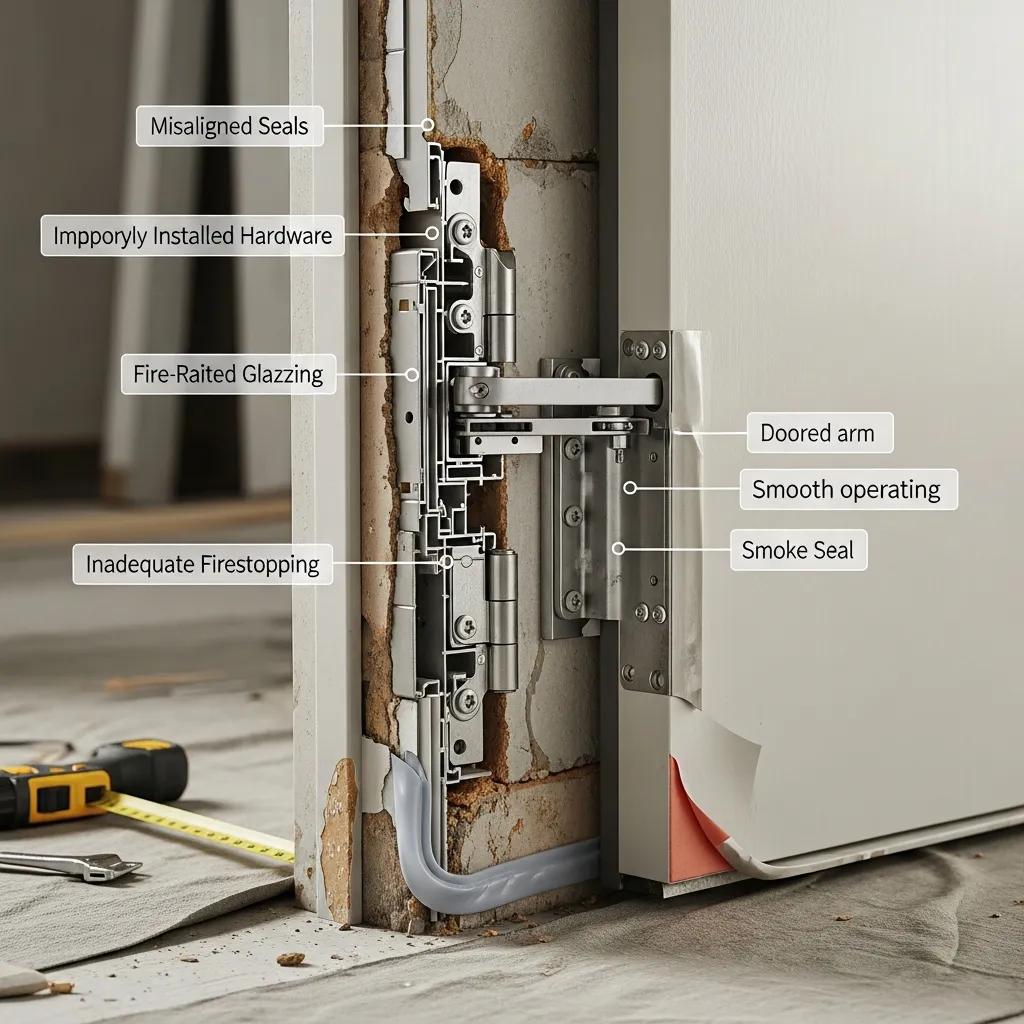
Common fire door installation mistakes to avoid include:
- Failing to secure or properly close the door, which can allow fire and smoke penetration.
- Ignoring the condition of intumescent seals and self-closing devices, as malfunctioning components can invalidate the fire rating.
- Not adjusting hardware like closers, latches, and panic devices to factory specifications during installation.
These mistakes can undermine the effectiveness of fire doors in maintaining safety and containment.
What Post-Installation Services Ensure Fire Door Longevity and Compliance?
Post-installation services that ensure fire door longevity and compliance include:
- Professional alignment and seal adjustments to prevent air and water infiltration.
- Post-installation inspections to confirm hurricane and fire-rating integrity.
- Routine inspections and timely repairs of hinges, seals, and hardware to prevent common failure modes.
- Lubrication and adjustment of moving parts to reduce stress and wear.
- Rust remediation and recoating to protect steel surfaces in humid conditions.
- Emergency repair teams to restore fire-rated and impact doors to code after damage.
- Scheduled maintenance contracts for predictable budgets and preserved door performance.
How Often Should Fire Doors Be Inspected According to NFPA 80?
According to NFPA 80, fire doors should be inspected at least annually. However, in high-traffic environments, more frequent checks may be beneficial, such as quarterly or semi-annual visual checks. Critical egress routes in commercial buildings may require monthly operational tests and quarterly comprehensive inspections. Residential fire doors typically undergo annual professional assessments supplemented by periodic self-checks.
What Maintenance Practices Keep Fire Rated Doors Functional?
Maintenance practices that keep fire-rated doors functional include:
- Preserving seals, hardware, and closing mechanisms.
- Regularly checking for and addressing neglected clearances or worn components.
- Conducting consistent upkeep to enhance the mechanical integrity of the doors.
- Performing routine service to demonstrate due diligence and reinforce compliance with safety regulations.
These practices help ensure that fire doors operate effectively during emergencies, contain fire and smoke, and protect occupants and property.
How Much Does Fire Rated Door Installation Cost in Miami and South Florida?
The cost of fire-rated door installation in Miami and South Florida typically ranges from $1,000 to $2,500 per door, including installation.
What Influences the Price of Fire Rated Door Installation?
The price of fire-rated door installation is influenced by several factors, including:
- Material and Gauge: The choice of material (e.g., standard steel, G90-galvanized steel, aluminum, stainless steel) and the gauge of the steel can affect costs. Heavier gauges and stainless steel typically command higher prices.
- Fire Rating: The fire resistance rating of the door (e.g., 20, 45, 60, 90, or 180 minutes) can incur premium fabrication and testing charges.
- Installation Complexity: Site conditions, such as whether the installation is a retrofit or a new opening, can impact labor costs and frame modifications.
- Glazing Options and Hardware: Additional features like glazing options and the complexity of hardware can also influence the overall price.
- Permit Fees: Costs associated with obtaining necessary permits can add to the installation price.
Understanding these variables helps clarify upfront budgets and informs value-driven choices for facility managers and contractors.
How Can You Get a Free Estimate from Oratso Corp?
To obtain a free estimate from Oratso Corp, potential clients can contact the company directly. They will need to provide details about the installation site, including dimensions and specific requirements for the fire-rated doors. This information allows Oratso Corp to offer tailored estimates that reflect the unique needs of each project.
Why Choose Oratso Corp for Your Fire Rated Door Installation Needs?
You should choose Oratso Corp for your fire-rated door installation needs because they offer competitive pricing, free estimates, and emergency or overnight service, minimizing downtime and ensuring code compliance. They provide a wide range of fire-rated doors, guarantee proper installation, and offer repair services to restore fire resistance. Their technicians adhere to NFPA 80 protocols and local codes, ensuring compliance with detailed checklists and documentation. Additionally, their customer-focused approach ensures prompt responses and flexible scheduling for maintenance.
What Experience and Certifications Does Oratso Corp Offer?
Oratso Corp offers installation, repair, and maintenance services for doors and windows, focusing on safety and quality. Their technicians are licensed and insured, ensuring compliance with industry standards. They provide a range of commercial fire-rated doors and adhere to NFPA 80 protocols and local building codes. Additionally, they have a rapid-response team for emergency repairs and offer free estimates and consultations.
How Does Oratso Corp Provide 24/7 Emergency and Local Service?
Oratso Corp provides 24/7 emergency and local service through emergency response teams that are prepared for urgent repairs on roll-up and swinging fire doors. They also offer overnight service for critical steel assemblies, ensuring rapid deployment to minimize exposure to risk and allowing facilities to resume normal operations with full fire-safe integrity within hours of reporting.